
Indians at large harbour a notion that their country is cherrypicking out of the American basket of goodies, but the policymakers in Delhi and the political leadership are well aware that it can only be a pipe dream since a military alliance with a superpower is a profound irrevocable commitment, observes Ambassador M K Bhadrakumar.

After a ceremonial welcome at the White House on Monday, Prime Minister Manmohan Singh will hold wide-ranging discussions with Bush.

"Both India and China are victims of terrorism and the region was suffering from the menace. The prime minister said no country is immune from terrorism and on this issue, we cannot afford to have any differences," MEA spokesperson Vikas Swarup told reporters after the meeting.

Indonesia is not even counted as a next-door neighbour of India, though the southern-most tip of India is less than a hundred miles away from the northern-most tip of Indonesia. Bringing Indonesia back in the mainstream of the Indian strategic calculus is a step long overdue, says Dr Rahul Mishra.

After his wide-ranging talks with Modi on the second and final day of his India visit, Johnson said the new defence and security partnership will enable India to strengthen its domestic defence industry as well as help the two countries protect vital shared interests in the Indo-Pacific.
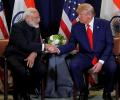
'If we cannot conclude a trade deal, both sides are likely to take trade actions that will further impair our government-to-government ties.'
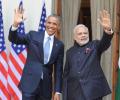
The US wants its trade with India to grow multi-fold, Assistant Secretary of State for South and Central Asia Nisha Desai Biswal told lawmakers.

Japan and India signed a 5-point action agenda to increase bilateral trade and investment between the two nations.
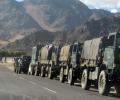
India on Friday said the onus is on China to address the remaining unresolved issues relating to the eastern Ladakh row and that peace and tranquillity along the frontier were key for the restoration of normal relations between the two sides.
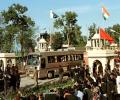
'Despite the subsequent events at Kargil and the October 12, 1999 military coup in Pakistan, the Lahore initiative firmly established Vajpayee's credentials as a crusader of peace,' says Colonel Anil A Athale (retd).

Britain has finalised 1 billion pounds worth of new trade and investment with India, creating over 6,500 jobs in the UK, to be signed off at a virtual summit between Prime Minister Boris Johnson and his Indian counterpart Narendra Modi on Tuesday. The investments confirmed by Downing Street on Monday evening form part of an Enhanced Trade Partnership (ETP), which will set the ambition to double the value of UK-India trade by 2030 and declare a shared intent to begin work towards a comprehensive Free Trade Agreement (FTA). "Like every aspect of the UK-India relationship, the economic links between our countries make our people stronger and safer," Johnson said.
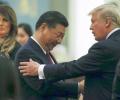
'While many Chinese policy makers dismiss the political, economic and technological component of US-India relations, they express caution on the defence-related ties which also happens to be a major driver in US-India relations,' explains China expert Srikanth Kondapalli.
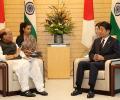
'Singh apprised the Japanese leaders about Islamabad's 'evil design' on Kashmir at a time when Pakistan has decided to internationalise the issue.'
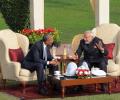
'When George Bush Senior decided in 1992 that India and the United States must start talking in this-now-changed world, who would have thought that 10, 15 years down the road, we will start looking at each other as strategic partners?'

Being a pragmatist Modi is not likely to give preference to China over Japan. Both security and economic aspects are likely to shape Modi's decision in terms of engaging the two biggest economies of Asia, says Sana Hashmi.
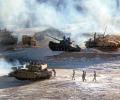
India's national security strategy needs to be revised periodically since the global and regional geopolitical situation is dynamic, points out Commodore Venugopal Menon (retd).

'Neither will China -- at least for now -- because its troops are deployed in equal strength.' 'We are negotiating at equal terms right now and it's a game of patience.'
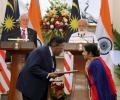
Considering the common linkages, high-level trust, complementarities, and convergent interests between the two nations, Malaysia has the potential to become India's key partner in Southeast Asia, says Dr Rahul Mishra.

United States aerospace major Boeing on Thursday said it received approval from the country's government to offer its F-15EX multi-role combat jet to the Indian Air Force.

Pakistan is expected to discuss with the US, the alleged role of India's external spy agency RAW in abetting violence in the country.

She also sought confidence building measures to be undertaken on the lines of those initiated in 2002.

Prime Minister Narendra Modi had gone to China with a bagful of initiatives, but not all seems to have been fulfilled given China's reluctance to go the whole hog with him
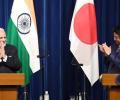
'Relations between India and Japan are robust and devoid of either shadow of history or any irritant.' 'In fact, there is plenty of warmth and goodwill earned over history. There are no negatives but only opportunities,' notes Dr Rajaram Panda.
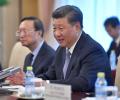
Xi said China is ready to work with Pakistan to forge a closer China-Pakistan community of shared future in the new era.

'The potential of one such LAC engagement going out of control and leading to heavy casualties cannot be ruled out,' warns Lieutenant General Syed Ata Hasnain (retd).
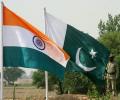
So far, almost every positive development in terms of the bilateral ties has been overtaken by innate hostility that is often driven by popular sentiments.
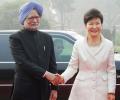
South Korean President Park Geun-hye's visit to India will enhance economic and military ties between the two countries and give the relationship a strategic dimension, says Jiye Kim.

The USS John Paul Jones acted like a dog marking the lamp post, observes Ambassador M K Bhadrakumar.

Biden has reiterated America's support for India's permanent membership on a reformed UNSC and its entry into the NSG during his first in-person bilateral meeting with Modi at the White House.

The Chinese media has accused India of using the Dalai Lama card to deal with China's growing economic and political influence in South Asia and warned New Delhi of "severe consequences" if it hosted the Tibetan spiritual leader in a "disputed" area in Arunachal Pradesh.

'The Modi government's greatest blunder is to exploit sensitive external relations in its domestic politics,' says Shekhar Gupta.

In the first-ever separate resolution on foreign policy brought in its National Executive in Bengaluru, BJP attacked the previous Congress-led Government, saying "a cursory glance at the 'lost decade' of the UPA, reveals retreat and a loss of direction in engaging with neighbours, ham-handed diplomacy vis--vis Pakistan and a blind-spot in our foreign policy to the Indian Ocean island states."

India-China relations have always attracted Parliament's attention and there have always been useful and productive and constructive discussions how to engage with China, notes Rup Narayan Das.

By hosting the 10 ASEAN leaders on Republic Day, India amply demonstrated that ASEAN is a central pillar of its Act East policy. But is India 'central' for ASEAN, asks Dr Rahul Mishra.
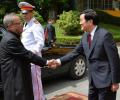
India and Vietnam on Monday inked seven pacts, including one to enhance cooperation in the strategic oil sector, as they called for "freedom" of navigation in the South China Sea, a remark which could irk China, which has been claiming territorial sovereignty over the high seas.

Prime Minister Malcolm Turnbull's first State visit to India is an indication of the success of India's Act East Policy, says Dr Rahul Mishra.

'The Indian version is that the two top diplomats merely exchanged pleasantries, while the Pakistani side characterised the encounter as an 'informal dialogue'.' 'The truth, as always in such piquant situations, is somewhere in between.' 'It stands to reason that ice has been broken,' says Ambassador M K Bhadrakumar.

India said a new mechanism will be set up for issues relating to trade and investment.

The prime minister and the Chinese president walked along the banks of East Lake and also took a boat ride together as they decided to step up their personal rapport.

'The past year has yielded extraordinary results in the strategic, commercial, and people-to-people components of the India-United States partnership, US Ambassador to India Richard Rahul Verma tells Aziz Haniffa/Rediff.com in an exclusive interview.
 © 2026 Rediff.com - Advertise with us - Disclaimer - Privacy Policy - Sitemap - Feedback - About us - Terms of use - Grievances